Can Seal Centre / WEC research solve the mystery of the seals?
Research supported by WWF-NL shows that young common seals aren’t disappearing, but appear to be dying at an increasing rate during their first year of life.
After years of increasing common seal numbers in the Wadden Sea region, more recent counts by the Trilateral Seal Expert Group paint a worrying picture: many pups are being born, yet the overall population is declining. Until now, it has been a mystery what was happening to the young seals. Preliminary findings from research conducted by veterinarians at the WEC/Seal Centre Pieterburen and researchers at Utrecht University indicate that, over the past 10 years, young common seals have not been disappearing, but have instead been dying at an increasing rate. This research was made possible by the World Wide Fund for Nature Netherlands (WWF-NL), which has also committed to funding further research into the causes of death.
See also


Dit nieuws komt op een moment waarop het voortbestaan van het WEC/Zeehondencentrum onder grote druk staat. Afgelopen vrijdag is de voorgenomen faillissementsaanvraag met een week uitgesteld, mede dankzij de overweldigende steun en donaties die het centrum de afgelopen tijd heeft ontvangen. Daarmee is er extra tijd ontstaan om te werken aan een oplossing, maar de toekomst is nog onzeker.
Als het WEC/Zeehondencentrum moet sluiten, komt ook de voortgang van dit belangrijke onderzoek naar de achteruitgang van de gewone zeehondenpopulatie en de mogelijke doodsoorzaken in gevaar.
Increasing mortality among young seals
Since the seal virus outbreak in 1988, stranded seals have been recorded in the Seal Centre’s database. Since 2015, these records have been collected according to a revised, standardised protocol combined with post-mortem examinations, making this research possible. The study highlights the important role of long-term monitoring, seal rehabilitation and research in tracking developments in the Wadden Sea and the health of protected marine mammals.
The researchers initially focused on compiling and analysing all available data. Over the entire study period (2015–2025), they observed an increase in the number of common seals found dead. Although these numbers largely rose in line with the population, this was not the case for young common seals. In this age group, the research shows that increasing numbers of dead animals are being found each year.
Further research into causes of death
The post-mortem reports of 995 common seals found dead were also examined in greater detail. The findings show that many young common seals suffer from lungworm infections. The severity of these infections and their effects on the seals’ health are still being investigated. However, it is unlikely that lungworm infections alone explain the increase in mortality.
Further research is therefore needed to establish the causes of death among young common seals more clearly and to determine whether these causes have changed over the study period. WWF-NL has now pledged its support for this work.
Seal stranding research at Utrecht University
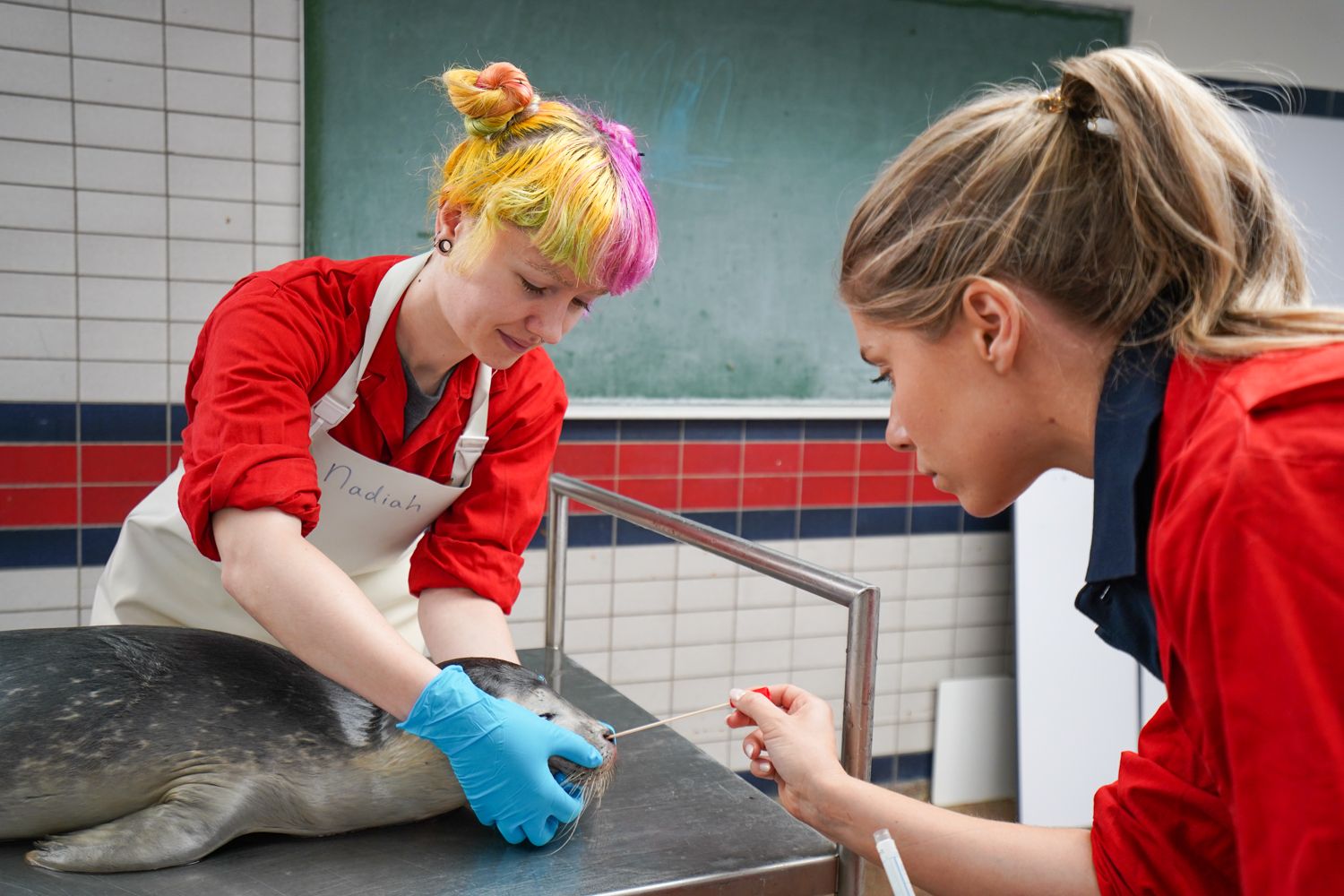
The WEC/Seal Centre and Utrecht University have been collaborating on seal stranding research for many years. Since last year, a number of dead seals have been taken to Utrecht for pathological examinations at the university’s Faculty of Veterinary Medicine. These animals are examined as part of specific research projects.
Since 2008, Utrecht University has investigated the causes of death of stranded common porpoises and, more recently, larger marine mammals such as whales and dolphins. The university previously expressed its enthusiasm about expanding this work to include seals, in order to investigate the decline in the Wadden Sea region and assess seal health. As top predators, marine mammals are important indicators of the health of their ecosystem.
Biologist Lonneke IJsseldijk, head of the Stranding Research team, explains: “These initial findings show us that something is clearly going on. This makes it all the more important to establish the causes of death properly, so that we can gain a better understanding of the health of these animals before they die.”
Supported by WWF-NL
WWF-NL believes that gaining a better understanding of the Wadden Sea ecosystem is essential. Kees Verhoog, Head of the Netherlands Programme at WWF-NL, explains: “The common seal is the canary in the coal mine for the Wadden Sea. After 40 years of success in reducing hunting and pollution, the common seal population is shrinking again. It is worrying that the initial results now show that increasing numbers of young seals are not reaching adulthood. We hope the follow-up research will show us how we can do more for common seals and all the life that depends on the Wadden Sea.”
Seal Centre facing the threat of bankruptcy
Het voortbestaan van het WEC/Zeehondencentrum is momenteel onzeker. Afgelopen vrijdag is de voorgenomen faillissementsaanvraag met een week uitgesteld. Bij een faillissement komt niet alleen de voortgang van dit onderzoek in gevaar, maar ook het werk van het centrum op het gebied van zeehondenopvang, onderzoek, monitoring en educatie. Juist nu de gewone zeehondenpopulatie in het Waddengebied lijkt af te nemen en de oorzaken daarvan nog niet duidelijk zijn, is het belangrijk dat deze kennis en expertise behouden blijven.
Dit onderzoek onderstreept het belang van professioneel ingerichte zeehondenopvang, volgens de afspraken van het Zeehondenakkoord, in combinatie met langdurige monitoring en wetenschappelijk onderzoek. De betrokken partijen hebben daarom besloten de resultaten nu al naar buiten te brengen. Meer inzicht in de ontwikkeling van de zeehondenpopulatie en de mogelijke doodsoorzaken is van groot belang voor de bescherming van wilde zeehonden en hun leefgebied.
Continue reading